
The Weimaraner isn’t the easiest dog to train. A playful Weim puppy might seem adorable at first. It is so easy to let go of and laugh at every tumble, messy kitchen or wrecked furniture at home. But, left untrained and untamed, these energetic, rambunctious and playful pups can be home hazards and cause you more stress than joy.
Adequate and effective training is part of the successful ownership of Weimaraners. Training a Weim pup is not just for your sanity, it is also for their safety and wellness. Misbehaving dogs aren’t only a threat to you and your family, but also themselves. Remember, there are no bad dogs, only irresponsible owners.
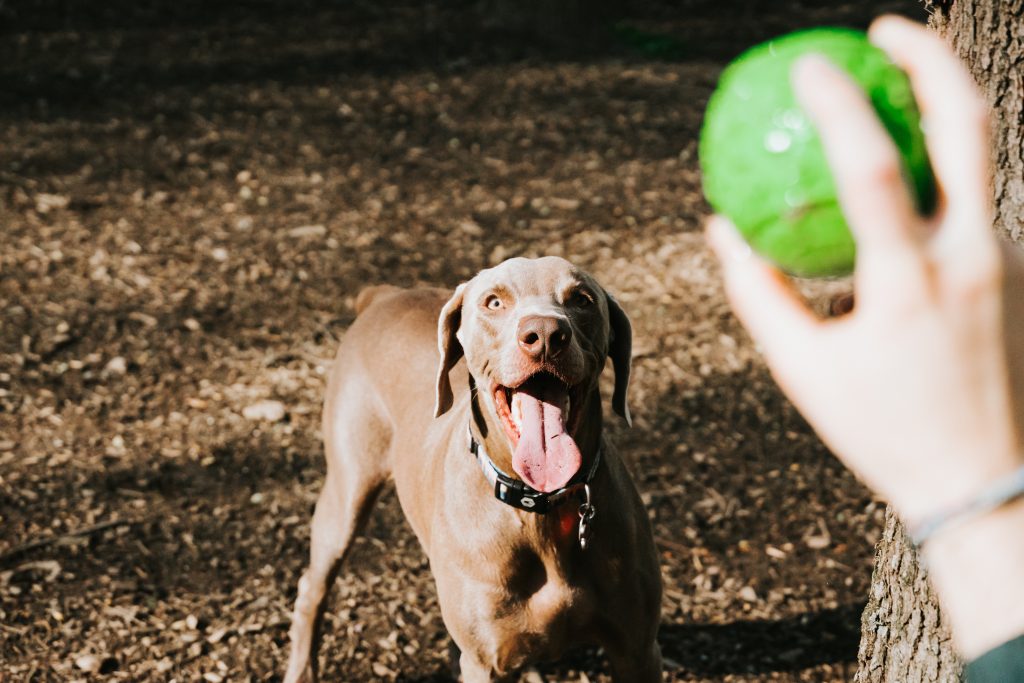
Three Essential Training for Weimaraners
Housebreaking – Crate training is essential to any puppy adoption and home integration. For Weimaraner puppies, this could mean the sanity for you and your dog. Crates will serve as your dog’s domain, the den where they can feel completely safe and restful. Fill their crate with treats, toys, and make it comfortable. You can feed them inside the crate in their first few days at home. Shower your doggie with lots of praise and rewards whenever he voluntarily goes inside.
Separation and anxiety – Weimaraners hate being left alone. They resort to chewing, barking, digging, and even soiling when left too often and in undesirable circumstances. You need to build their confidence and independence, so you also get to continue with your daily routine. Start training as soon as they get home. First, they will insist on following you around the house. Try leaving them in another room and only return when they are calm and silent. Stay away longer as you progress with the training.
Socialising – Untrained Weimaraners tend to be aloof and will avoid other people. They don’t like to be around strangers and aren’t easy to trust people they barely know. They are naturally predatory as well as they are territorial. Thus, untrained Weim puppies can be a hazard to your neighbours’ kitty, the mailman, the neighbourhood kids, and even to the doggie ghosts in your living room. Start socialising your dog by introducing him to other people and pets. When making introductions, make sure that the surroundings are comfortable for your dog. Have them on a leash to anticipate surprise reactions. Avoid shouting, loud noises, and extreme gestures that might excite the dog. Keep in mind that this could be a stressful event for them.
Tips to Training Weimaraner Puppies

Start them young
Start training as soon as you get your Weim puppy home. Short and frequent sessions are more effective than long-winded ones. Start with the basic sit, stay, look, down, come, and leave it commands. Keep treats handy and train every opportunity you have. Consistent and fun training lead to positive results.
Catch their attention
Catching their attention while engaged in play or any other activity is the first step to training Weimaraners effectively. These bouncy balls of energy are short in attention and tend to be all over the place looking for something interesting. Use treats, food, or toy to help in the training. Whenever they look at you, offer a reward. Reinforce the behaviour with a specific command like calling their name or a whistle. Maintaining eye contact is another way to catch their eye and letting them know that they need to keep their attention on you.
Highlight good behaviour
Positive reinforcement is the key to effective Weimaraner training. Keep treats on hand and reinforce whenever your puppy does a positive behaviour like fetching the ball and returning it on a come command or sitting up when commanded to sit. Even when they give their full attention to you when call merits a reward.
Keep them busy
One way to stave off bad behaviour is by constant mental stimulation. Weims have active minds that could easily get bored. Instead of giving them treats right off your hands, place it in a closed cardboard box and let them chew through it. Use puzzle feeders, engage half an hour of active play at least twice a day, let them search for kibbles in the grass, or wrap them in a ball of paper that will challenge them.
