
Grooming a Weimaraner: the short coat, bathing, nails, ears and teeth in one weekly routine
A Weimaraner's short coat needs little: a weekly rub-down, occasional baths, nail care, and ear and tooth checks your vet shows you. The routine, step by step.
The honest answer to "do Weimaraners need grooming?" is: not much, but regularly. The short coat looks after itself with a weekly brush, and most of the real work is in nails, teeth and keeping an eye on ears. This guide opens our care and everyday life section and puts the whole thing into one calm weekly routine.
Key takeaways
- A weekly brush or rub-down is usually enough for the short coat; breed authorities describe grooming as a once-a-week job1
- Nails are the biggest job: keep them short, and ask your vet or groomer to show you how
- Ears and teeth are things to look at every week and talk to your vet about, not things to tackle on your own
What a Weimaraner's coat needs (and does not)
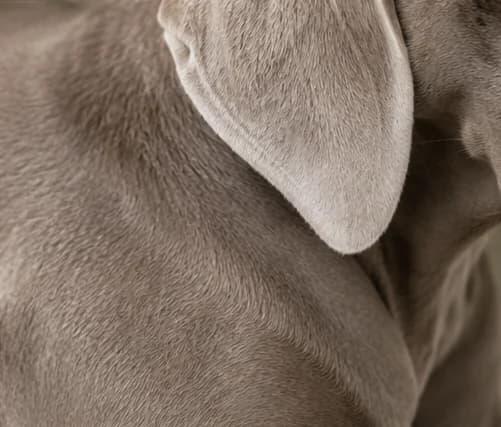
Most Weimaraners have a short, close coat, and that makes them one of the easier gundogs to keep tidy. The Royal Kennel Club lists the breed's grooming need as "Once a week" and notes that there are two coat types, smooth and long-haired.1 The PDSA, a UK veterinary charity, calls Weimaraners "very low maintenance on the grooming front thanks to their short coats" and says a weekly brush "should be plenty to keep on top of any dead hairs".2
A short coat is not a coat that never sheds. The PDSA says Weimaraners shed all year round, with a little extra brushing and hoovering often needed in spring and autumn.2 If shedding or allergies are your main question, our guide to Weimaraner shedding covers it in detail.
What the coat does not need is clipping, stripping or a regular trip to the salon. Grooming for this breed is mostly about keeping the coat clean and comfortable, and using the time to look your dog over. The Weimaraner Club of America puts it simply: doing the basics of nails and teeth "makes up the majority of the work".3
The weekly routine
Pick a quiet time when your Weim is already relaxed, such as after a walk and a drink. Have treats ready, keep sessions short, and stop if your dog is worried: the PDSA's advice is to "take things slowly, and stop if your pet is worried or stressed".4
- Coat. Brush or rub the coat in the direction it grows, using a brush, mitt or comb that suits a short coat. The American Kennel Club says the short coat "should be brushed to remove 'dead hair'".5
- Look over eyes and ears. Have a gentle look and a sniff. You are getting to know what normal looks and smells like for your dog, not hunting for problems.
- Check the nails. Look at the length and listen when your dog walks on a hard floor. Trim, or book a trim, if they need it (see nails and paws).
- Look at the teeth. Lift the lip briefly and look at teeth and gums, then reward. Brushing, if your vet has shown you how, fits in here.
- Finish with something good. End on a treat, a game or a cuddle, so the next session starts from a happy memory.
As you go, notice anything that seems new or different: a sore spot, a change in the skin or coat, a smell you have not noticed before. The PDSA advises keeping an eye out for changes in your pet's skin or coat and contacting your vet with any concerns.4 You do not need to know what a change means; you only need to mention it.
Bathing: how often and with what principles
Weimaraners rarely need a full bath. The Weimaraner Club of America notes that the short, sleek coat washes out and dries quickly, and that how often you bathe "depends on where they get to run".3 A Weim that spends its life on pavements may barely need one; a Weim that finds every fox trail and muddy pond will need more.
A few principles keep baths comfortable:
- Rinse first, wash second. The PDSA notes that dogs do not usually need frequent baths, because shampoo can strip the coat's natural oils, and that a rinse in warm water is often enough for a muddy coat.4
- Use a dog shampoo, not your own. The PDSA lists a dog-specific shampoo among the basic grooming kit.4 If your dog's skin is sensitive or has a condition, ask your vet or groomer which shampoo to use before you bathe.4
- Warm water, warm dog. Dry your Weim well afterwards and keep them out of cold draughts until the coat is dry.
- Make it a good experience. Treats, a non-slip mat in the bath or shower, and short sessions help a dog learn that bathing is fine.
The "Weimaraner smell" people mention after a walk is usually something they have rolled in rather than the coat itself. The Weimaraner Club of America describes field dogs proudly wearing a "perfume" only a dog could love.3 A rinse deals with most of it. A smell that does not wash out, or one coming from the ears, mouth or skin, is worth showing your vet.
Nails and paws
The American Kennel Club is blunt about this: "The biggest job in grooming the Weimaraner is keeping the nails short."5 It explains that nail length is important for your dog's comfort and health, that long nails are hard to bring back, and that if you can hear a "tap-tap-tap" on a hard floor, the nails are too long.5
Some dogs wear their nails down on hard ground, but many do not. The PDSA notes that dogs who walk little on tarmac, or who have reduced mobility, are more likely to need regular clipping.4 Older dogs often need trims more often, and the RSPCA says your vet can do this for you.6
Trimming a dark nail without catching the sensitive inner part takes practice, and it is far easier if someone shows you first. Ask your vet, vet nurse or a qualified groomer to show you on your own dog. Our guide to nail trimming and paw care covers the handling steps in detail. While you are down there, have a look at the pads and between the toes after rough or icy walks.
Ears and teeth: what to look at, and why technique is a conversation with your vet
Weimaraners have long, folded ears, and the sources do not all say the same thing about cleaning them. The American Kennel Club reminds owners to clean the ears, because the breed's ear structure limits airflow.5 The PDSA says most dogs do not need their ears cleaned regularly, and advises contacting your vet before cleaning your dog's ears, especially if you have noticed a problem.7 The safe way through is to look at the ears during your weekly routine, learn what is normal for your dog, and ask your vet whether your dog needs cleaning at all and, if so, how. We do not describe a cleaning technique here. Our ear care guide will cover this once a vet has checked it.
Teeth are similar. The RSPCA says to check your dog's teeth as part of their regular grooming routine, and that it is best to ask your vet to show you the right way to clean them.8 The PDSA's guide to checking your dog's teeth explains how to get a dog used to having its mouth looked at, and says to book a vet appointment if you notice any problem with the teeth, gums or breath.9 Brushing technique, toothpaste and chews are questions for your vet; our dental care guide will follow once a vet has checked it.
Long-haired Weimaraners
The Royal Kennel Club lists both smooth and long-haired coats for the breed.1 A longer coat holds on to mud, burrs and tangles in a way the short coat does not, and the PDSA notes that long-haired breeds in general need brushing more often than short-haired ones.4 The weekly routine above still applies, with extra brushing time.
Our guide to the long-haired Weimaraner explains the coat type and where it is recognised, and a separate long-haired grooming guide is planned.
Making grooming pleasant: cooperative care basics
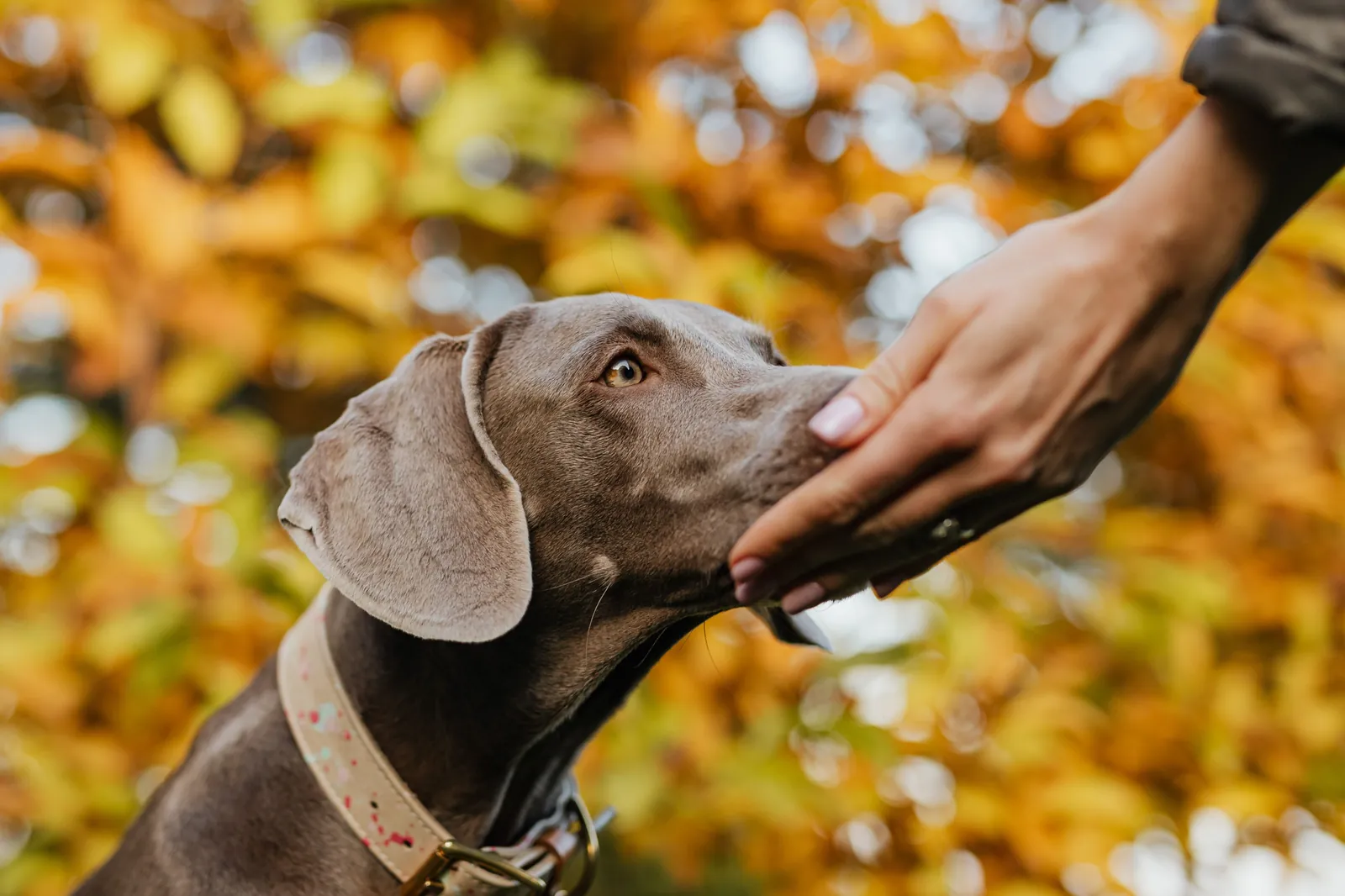
A Weimaraner that is happy to be handled is easier to groom, easier to examine at the vet and less stressed by both. The RSPCA says socialisation and reward-based training help dogs get used to grooming, and that you should be patient and never force a dog to be groomed.10 That is the heart of what trainers call cooperative care: teaching your dog that handling predicts good things, and letting them take part rather than be held down.
- Start small. Touch a paw, reward, stop. Next time, hold it a moment longer.
- Pair tools with treats. Let your dog see and sniff the brush or clippers before they touch anything.
- Watch for "no thanks". If your dog pulls away, goes still or tries to leave, the session is too much. Go back a step, and end on something easy.
- Use calm as a base. A dog that can settle on a mat is easier to groom. Our settling and calm guide shows how to build it.
If you are starting with a puppy, our puppy care guide covers early handling. A dedicated cooperative care guide is planned, and will be checked by a force-free trainer before it publishes.
When to see a groomer or the vet
A groomer can help if you would rather not trim nails yourself, if your dog needs a thorough bath you cannot manage at home, or if you have a long-haired Weim with a tangled coat. The RSPCA suggests getting recommendations, meeting the groomer first, and asking about training, insurance and how they handle dogs.10 A good groomer, the RSPCA adds, can show you how to groom correctly at home.10
See your vet, not a groomer, about anything that looks, smells or feels different to you, or a dog who suddenly dislikes being touched somewhere. You do not need to decide whether it matters; that is your vet's job, so ask. As your dog gets older, grooming is also a good moment to notice changes; our guide to the senior Weimaraner explains what to mention to your vet. For anything clinical, start with our health section. If you are thinking about how you would pay for unexpected vet bills, our pet insurance guide explains how policies work and what to compare.
Common questions
Do Weimaraners need grooming?
How often should I bathe my Weimaraner?
Should I clean my Weimaraner's ears?
Do Weimaraners smell?
Not usually. A Weim that smells after a walk has normally rolled in something; a rinse fixes most of it. A smell that lingers, or comes from the ears, mouth or skin, is one to show your vet.
Footnotes
-
Weimaraner Club of America: Living with a Weimaraner (Carole Lee Richards). ↩ ↩2 ↩3 ↩4
-
PDSA: How often should you groom your pet? ↩ ↩2 ↩3 ↩4 ↩5 ↩6 ↩7 ↩8
-
American Kennel Club: Weimaraner dog breed information. ↩ ↩2 ↩3 ↩4 ↩5
-
RSPCA (UK): Caring for older dogs. ↩
-
RSPCA (UK): Cleaning your dog's teeth. ↩
-
PDSA: How to check your dog's teeth. ↩
Sources
- Royal Kennel Club: Weimaraner breed information
- American Kennel Club: Weimaraner dog breed information
- PDSA: Weimaraner
- Weimaraner Club of America: Living with a Weimaraner (Carole Lee Richards)
- PDSA: How often should you groom your pet?
- PDSA: How to clean a dog's ears
- PDSA: How to check your dog's teeth
- RSPCA (UK): Cleaning your dog's teeth
- RSPCA (UK): Choosing the right dog groomer
- RSPCA (UK): Caring for older dogs
Something wrong or out of date? Request a correction.